
Yunomi: The Japanese Teacup, and How It Differs from a Senchawan

A yunomi is held, not hooked. That is the whole design.
A Japanese teacup has no handle. To a first-time buyer that looks like an omission - until you pick one up, feel the heat come through the porcelain into your palms, and understand that this is the point.
But there is more than one Japanese teacup, and they are not interchangeable. This is what each one is called, what it is for, and how to choose.
Where the yunomi comes from

Sometsuke - cobalt blue under a clear glaze - is the oldest decoration in Arita.
The teacup arrived in Japan from China during the Nara and Heian periods, together with tea itself, and changed there over the centuries that followed.
Originally the word chawan simply meant “a bowl for drinking tea.” Then, in the Edo period, sencha - steeped leaf tea - became popular, and the vessels divided: one kind for sencha, another for plain hot water and coarse tea. From that split come the two broad families still in use today: the yunomi chawan and the kumidashi chawan.
The names, and what each one is for

| Name | Shape | Used for |
|---|---|---|
|
Yunomi 湯呑 |
Tall, narrow, no handle | Everyday tea, your own cup |
|
Kumidashi 汲み出し / senchawan |
Wide mouth, shallow | Serving guests |
|
Chawan 茶碗 |
Wide bowl, held in two hands | Whisked matcha |
|
Guinomi ぐい呑 |
Small cup | Sake |
One more word worth knowing: meoto - literally “husband and wife” - is a pair of cups, usually one slightly larger than the other. It is a long-standing Japanese gift for weddings and anniversaries.
Yunomi or senchawan?
Both hold hot tea. What differs is shape and occasion.
A kumidashi, or senchawan, has a wide mouth and a shallow floor. That makes it poor for drinking slowly - the tea cools - but excellent for looking at: the color of the tea, and the inside of the vessel, are both on display. Which is why it has always been the cup brought out for guests.
A yunomi is the opposite: tall, narrow, made to sit in one hand while you go on with your day.
That said, the rule has relaxed. There is nothing wrong with serving guests in a yunomi today - and with the range of yunomi now made, many people prefer to.

Why a yunomi has no handle

Narrow enough for one hand. The porcelain, not a handle, tells you the tea is ready.
The yunomi is a tall cylinder, slim enough to be closed in one hand. Two things follow from that shape.
First, the tea stays hot. A narrow vessel exposes less surface to the air than a wide one, so it loses heat slowly.
Second, the cup tells you when to drink. Porcelain conducts the heat to your hands. Too hot to hold is too hot to sip; when it settles, so has the tea.
Yunomi are now made in glass and in plastic as well as in porcelain. Glass shows the color of the tea; plastic survives being dropped. But for warmth in the hand and for holding heat, porcelain is still the reason the shape exists. For overseas customers, some kilns now make yunomi with handles - close to a mug in form, but with the body and the heat retention of Japanese porcelain.
Choosing a yunomi

- Decide whether it is yours or for guests. Your own cup can be anything you like. A cup you hand to a visitor is doing a second job, so pattern and finish matter more.
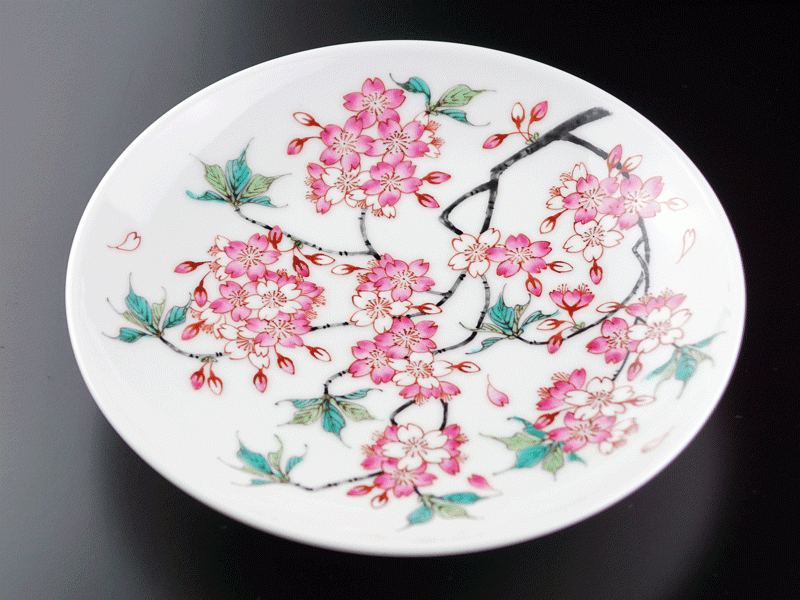
- Painted or carved? Sometsuke (cobalt blue under the glaze) and iroe (overglaze color) are painted by hand. Hakuji - plain white porcelain - is carved instead, and shows the form rather than the picture.
- Consider a pair. A meoto pair is the standard Japanese gift for a couple, and it is the reason so many yunomi are made in twos.
- Remember it is made by hand. Brushwork and glaze vary between pieces. The cup you receive will not match the photograph line for line.
A note on care

Hand-painted overglaze color and gold are the reason these are washed by hand.
Wash by hand in warm water with a soft sponge, and avoid abrasive cleaners, which dull the surface. Pieces decorated with gold or platinum must never go in a microwave. Plain white and blue-and-white pieces are more forgiving, but hand washing keeps any Arita cup looking new for longer.
See the work
Yunomi on JTOPIA come from six Arita kilns, each with its own hand. Pairs - the meoto format - are the most given as gifts.