
Mikihiko Yamaguchi: Hand-Carved White Porcelain from Arita

Arita porcelain comes in many forms: pieces painted in cobalt blue under the glaze, pieces painted in red, yellow, green and purple enamels, and pieces left white, decorated only with relief carving. Mikihiko Yamaguchi works in white. There is no color for anything to hide behind — only the form, the carving, and the light.
This guide explains what white porcelain is, who Mikihiko Yamaguchi is, and why his carved peonies are best seen against the light.
What hakuji is
Hakuji means white porcelain. Arita porcelain is made from a white clay body with glassy feldspar and silica, which is what gives it its smooth, almost translucent surface. Many Arita pieces use that white as a canvas for painting. Hakuji makes the white itself the subject.
That makes it one of the most demanding styles to work in. With no painted decoration, every curve of the form and every line of carving is on show.

Mikihiko Yamaguchi, master of white porcelain
Mikihiko Yamaguchi was born in Arita, in Saga Prefecture, and studied ceramics at the prefecture’s Arita Technical High School. The wheel-throwing that defines his work today, he taught himself. For more than forty years he has been making porcelain with soft, one-of-a-kind curves and a white that seems to glow from within.
Since around 1980 his work has been selected for many exhibitions, among them the Saga Prefectural Art Exhibition, the Seibu Craft Exhibition and the Arita International Ceramics Exhibition, and he has been selected five times for the Japan Traditional Kogei Exhibition. He is a Traditional Craftsman of Imari-Arita ware certified by Japan’s Minister of Economy, Trade and Industry, and a full member of the Japan Kogei Association. He also holds solo exhibitions at department stores and galleries.


Peonies carved into porcelain

Held up to the light, the carving in white porcelain comes alive.
At Yamamiki Kiln, his kiln in Arita, everything is done by hand — throwing on the wheel, shaping, carving and firing — and each piece is made one at a time.
His signature is the peony, carved in openwork into clear, brilliant white porcelain. Because the porcelain is translucent, the carving shows as beautifully as crystal when light shines through it, and as the light changes, the large blooms take on a different presence. In Japan the peony is called the king of flowers.


White, and blue-white
Alongside pure hakuji, Yamaguchi also works in seihakuji, “blue-white” porcelain, where the clear glaze carries the faintest tint of blue and collects a little more deeply in the carved lines. At exhibitions he shows large jars and incense burners in both.
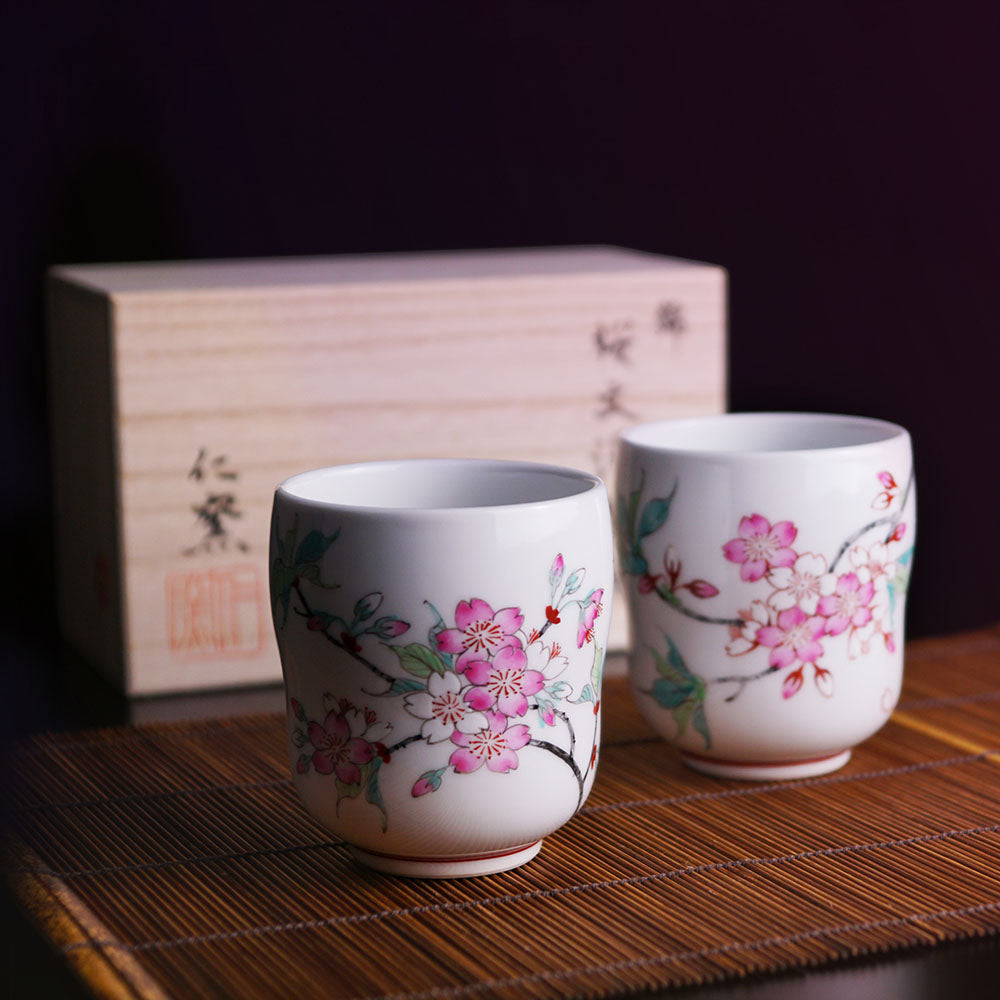
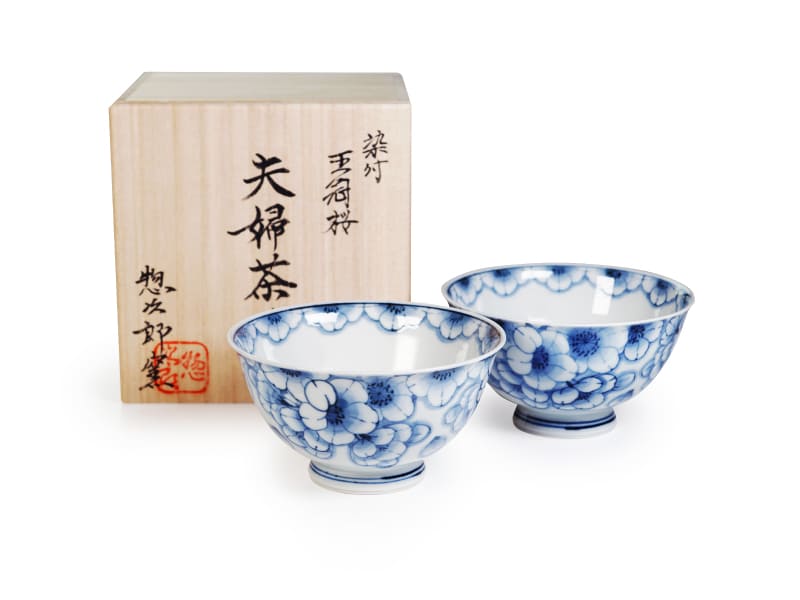
His work for the table is just as carefully made: rice bowls and yunomi for couples, sake sets, and coffee cups and mugs for every day. A single piece on the table is enough to draw the eye.
Choosing a piece
Whatever you choose, look at it against a window. The carving that seems faint on the shelf opens up the moment light comes through it. For a couple, the paired yunomi, rice bowls and whisky glasses are made to be given together. For yourself, a coffee mug or cup is the easiest way to see the white change through the day.