
Gagyu Kiln Pair of Rice Bowls - Egret Design
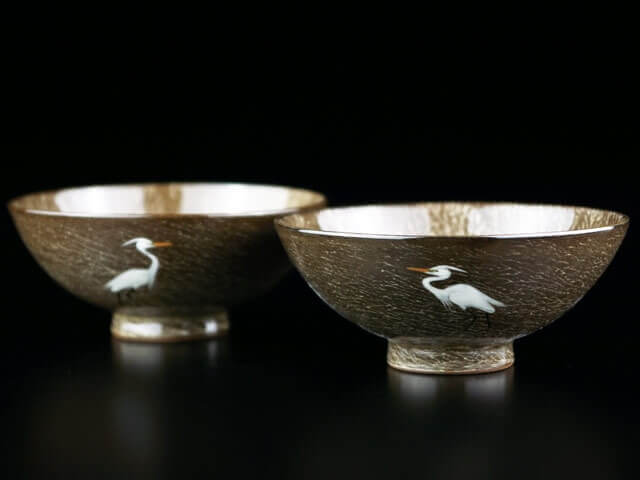
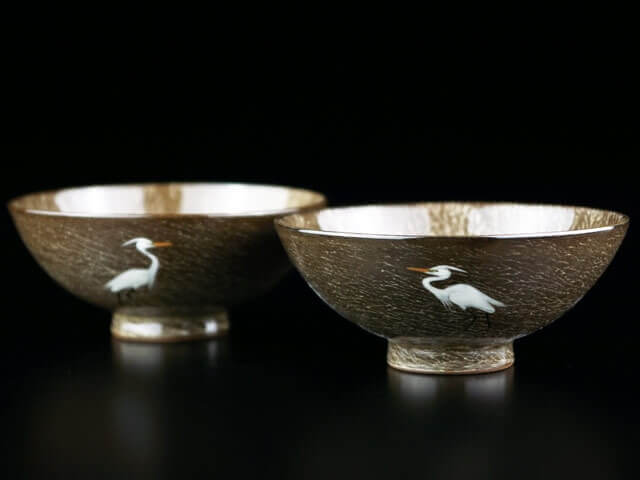
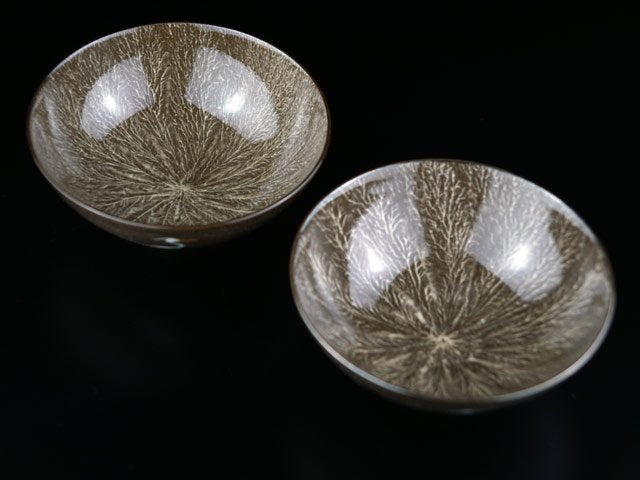
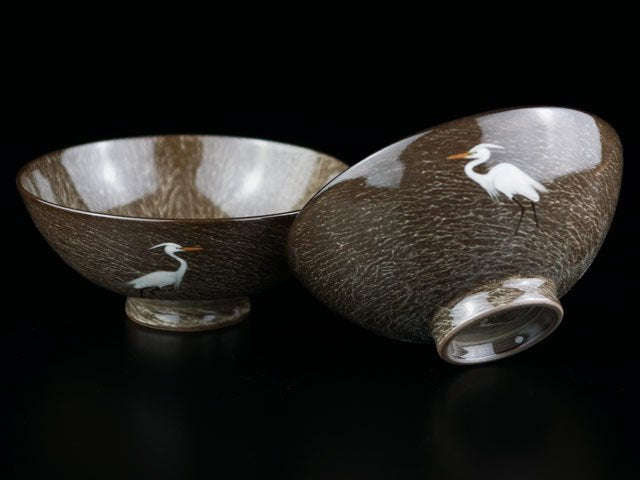
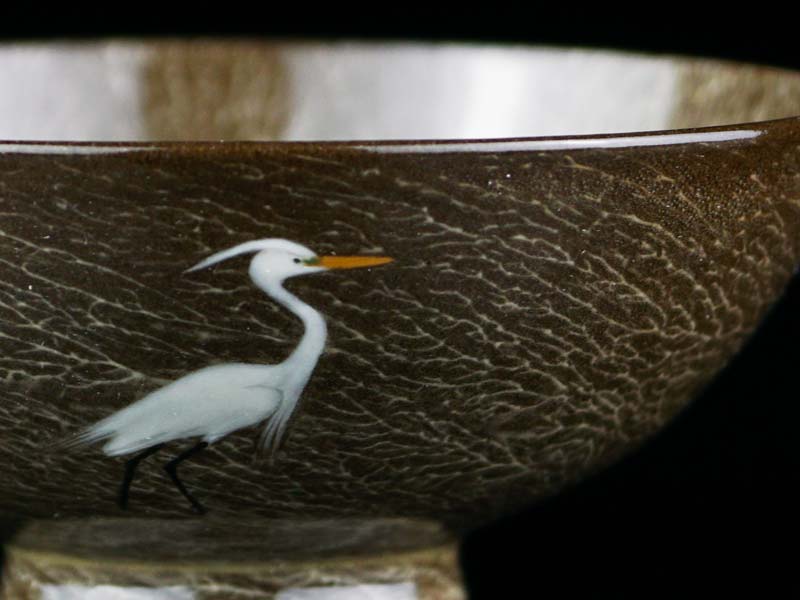
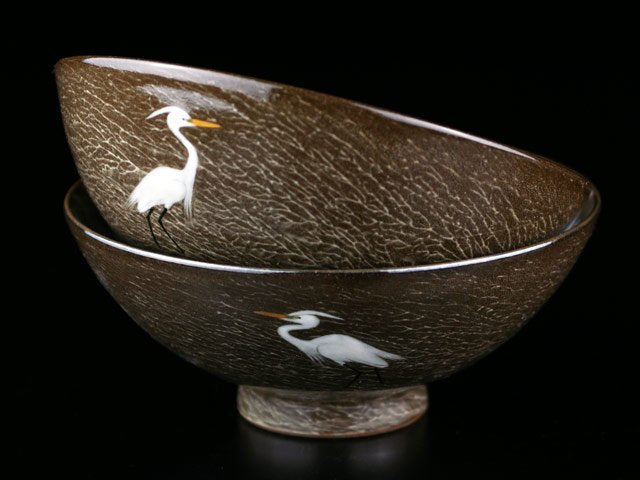
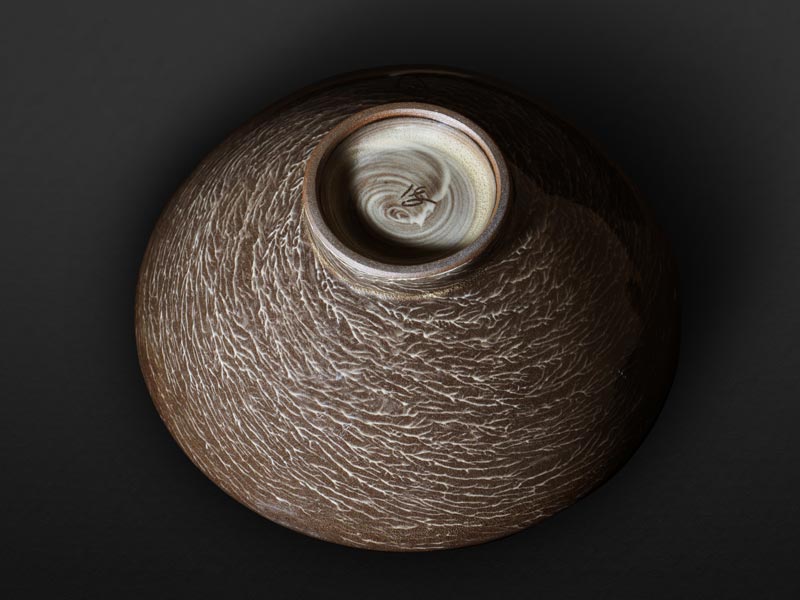
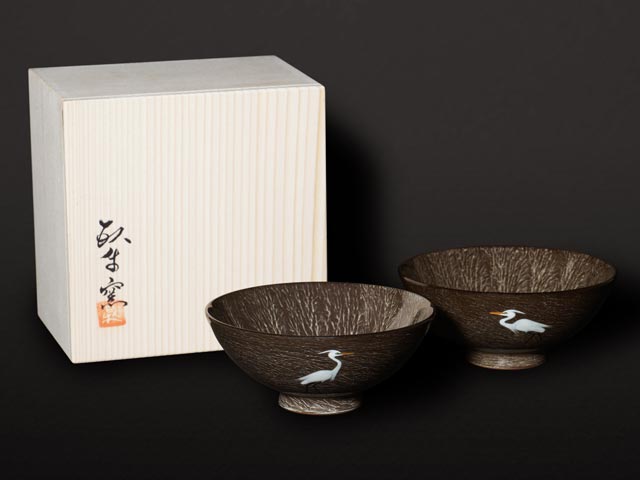
A meoto pair of rice bowls with egrets painted over milky-white hakeme (brush-stroke) marks.
Egrets with a Noble BearingBehind the egrets, painted with a noble bearing, lie soft-toned hakeme marks that give the scene a powerful sense of presence. This remarkable depth of perspective shows why it is a traditional technique selected as intangible cultural heritage of Nagasaki Prefecture.
A Finer Moment at the Table
Imagine the many scenes drawn from the tip of the craftsman’s brush, and savour a meal raised to something special.
A Gift for a Long Life
With a form you will never tire of and a refined composition, these bowls grace the table with quiet elegance — a popular choice as a gift to celebrate longevity.
What Is a Meoto Pair?
A meoto pair is a set of two vessels intended to be used together by two people, most often a couple. In Japan it is a long-standing form of gift for a wedding, an anniversary, or a new home — the pair itself carries the wish.
Why a Paulownia Box
Paulownia wood is light, resists moisture and insects, and moves with changes in humidity — which is why it has been used in Japan for centuries to store what is valuable. A piece delivered in a paulownia box arrives ready to give, and the box itself is part of the gift.
Contents and Dimensions
Rice bowl × 2, booklet, paulownia box.
Diameter: 12cm / Height: 5.2cm / Weight 140g
As each piece is handmade, slight variations in size may occur.
Product Size
※There may be slight variations in size and other aspects as these products are handmade.
Content
Care & CautionCreator
Choose options

A Prestigious House Designated as an Intangible Cultural Asset
横石臥牛
Gagyu Yokoishi
About
SHIPPING , CHANGE , RETURN
Please read before checkout and if need more information, check FAQ or Contact us
Yes, we ship all over the world. Shipping costs will apply, and will be added at checkout. We run discounts and promotions all year, so stay tuned for exclusive deals.
It depends on where you are. Orders processed here will take 5-7 business days to arrive. Overseas deliveries can take anywhere from 7-16 days. Delivery details will be provided in your confirmation email.
You can contact us through our contact page! We will be happy to assist you.
PRODUCTS WITH
OTHER DESIGNS


Category