
Article: Japanese Gifts and Their Meaning: How to Give a Gift the Japanese Way
Japanese Gifts and Their Meaning: How to Give a Gift the Japanese Way

When you give a piece of Japanese craft, you give more than an object. In Japan, a gift speaks through its colors, its motifs and even the way it is wrapped: red and gold for celebration, a flower for good fortune, a paper band that tells the recipient why the gift was given.
This guide is for anyone who wants to give a Japanese piece to someone special — for a wedding, a new home or a milestone birthday — and to give it with its meaning. It introduces pieces from Japan’s master kilns and craft workshops, and the Japanese customs that make a gift feel complete.
For a wedding

A peony on gold, from Fujii Kinsai Kiln.
In Japan, gold, and red and white together, are the colors of celebration, and they appear again and again on wedding gifts. Flowers carry meaning too. The peony has long been admired as a symbol of splendor; in the language of flowers it stands for regal dignity and for wealth and honor.
On Fujii Kinsai Kiln’s sake cup, a large crimson peony edged in indigo blooms against a background of shimmering gold. It comes in a paulownia wood box with a cloth dyed in ukon (turmeric) yellow. Shinemon Kiln’s Seiten glass is based on yuteki tenmoku, the glaze that feudal lords such as Oda Nobunaga and Toyotomi Hideyoshi treasured as a vessel for noble guests, and its rim is finished in real gold, a color that expresses everlasting happiness. It works as a free cup for any drink and holds large ice cubes with ease. For a couple, a matching pair is a classic choice — see our guide to Japanese pair tableware.


For a new home

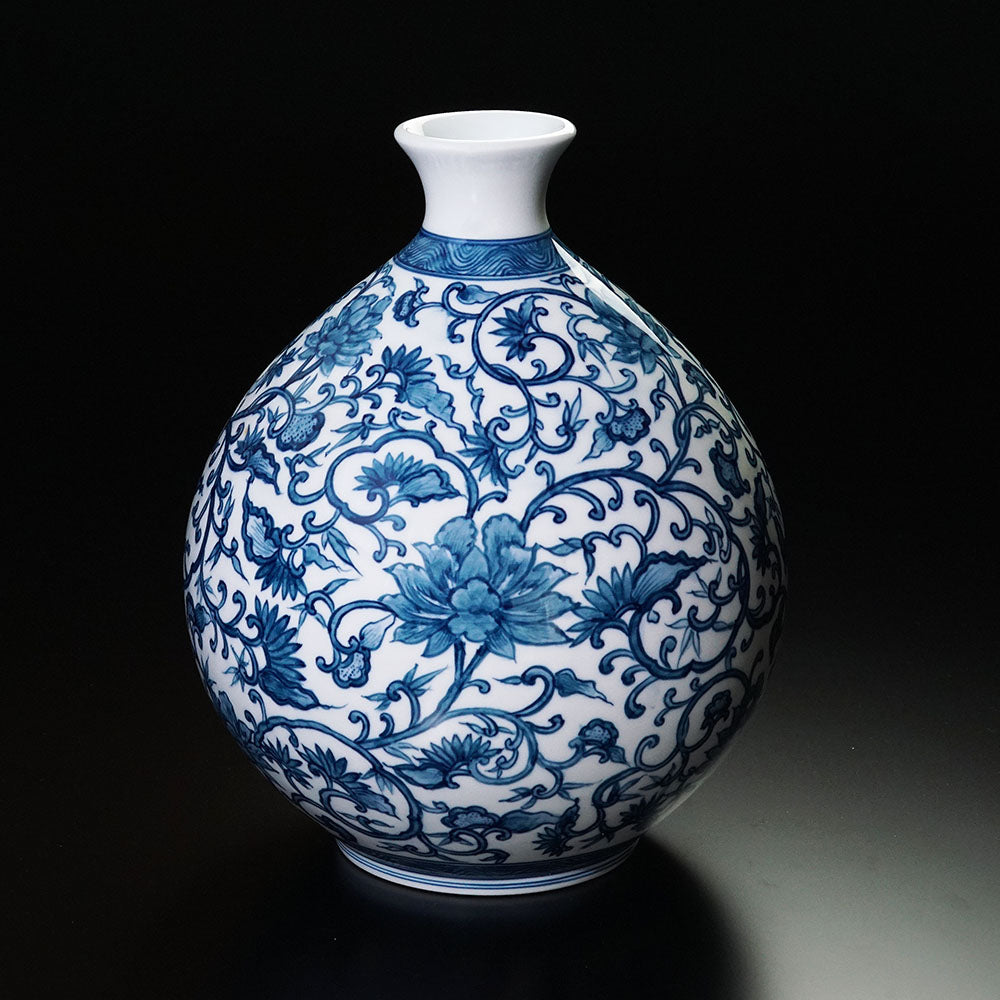
Saiun crane-neck vase from Shinemon Kiln.
A new home is a fresh start, and a piece that will be used and enjoyed there for many years makes a thoughtful gift: a vase that brings flowers into the house, or a cup for the first quiet coffee of each morning.
Shinemon Kiln’s crane-neck vase has a soft, gentle form, elegant at the neck and steady at the base. Its Saiun glaze — “colored clouds” — depicts the sky as it flushes red, a technique Shinemon developed from shinsha, a glaze known for its ruby color. Each vase is handmade and one of a kind, and it comes in a paulownia box specially inscribed by the kiln. Gagyu Kiln’s coffee cup has a calm presence: milky-white hakeme brushwork flows over brown clay, laid on in a single swift movement as the piece turns on the wheel.


Motifs that bring good fortune

The moon rabbit on a Gagyu Kiln rice bowl.
Many Japanese designs carry a wish. Where some see a face in the full moon, people in Japan see a rabbit pounding rice cakes, and the moon rabbit is a much-loved motif of autumn nights. The plum is the first flower to bloom in late winter, often while snow is still on the branches, and is cherished as the flower that announces spring.
On Gagyu Kiln’s rice bowl, a rabbit runs through a moonlit night, drawn with such a soft touch that it seems ready to leap out of the bowl; you can choose a full moon with the rabbit facing left, or a crescent moon with the rabbit facing right. Jin Kiln, a renowned kiln that has had the honor of presenting its work to the Emperor, painted a pair of birds as close as a loving couple among plum blossoms on its mug, which is light and generous in capacity.


For milestone birthdays and retirement

Shiro Tenmoku teacup from Shinemon Kiln.
Japan celebrates long life at special ages, each with its own color. At 60 comes kanreki, when the traditional cycle of the calendar returns to the year of one’s birth and red is the color of the day. At 99 comes hakuju, “white longevity”: take one stroke away from the character for 100 and it becomes the character for white. A retirement, too, is a milestone worth marking with something lasting.
Shinemon Kiln’s Hananohikari rice bowl glows a deep crimson in shinsha glaze, a technique loved by the emperors of China, with a rim of real gold. In Japan, red has long been regarded as a color that wards off evil and has been used for many good-luck objects. Shinemon’s Shiro Tenmoku teacup, inspired by a white tenmoku tea bowl designated a National Treasure, shows crystals like fresh snow and a rim of real gold, and is especially popular as a gift for hakuju and other longevity celebrations.


Presenting it the Japanese way

A Gagyu Kiln glass with its paulownia box.
In Japan, the way a gift is wrapped and handed over matters as much as the gift itself. A formal gift is often wrapped with noshi, a paper band with the purpose of the gift written at the top and the giver’s name below, tied with decorative cords called mizuhiki. For a wedding, the cords are tied in a firm knot that cannot be undone, a wish that the occasion will happen only once; for celebrations that may happily come again, such as a birth, they are tied in a bow.
Fine Japanese craft is traditionally kept in a box of paulownia wood, which is light and protects its contents from moisture. Often the box itself carries writing in ink, such as the name of the piece or the maker. When choosing a set, many people avoid groups of four or nine, because shi (four) sounds like the word for death and ku (nine) like the word for suffering. And when you hand over the gift, use both hands, with the front facing the recipient.
At JTOPIA, we offer Japanese gift wrapping, noshi, a paper bag and a handwritten message card free of charge, and a calligrapher can write names or a date to remember on the lid of the paulownia box as a paid service. Every piece in this guide comes in a paulownia box. Jin Kiln’s cherry blossom mug is painted by Obata Yuji; Gagyu Kiln’s glass, with the egret that is the kiln’s signature design, widens from a firm base toward the rim and is a popular gift for couples; and Uchiki’s Kihaku beer tumbler is scattered with gold and silver leaf by skilled artisans, so that no two patterns are the same.